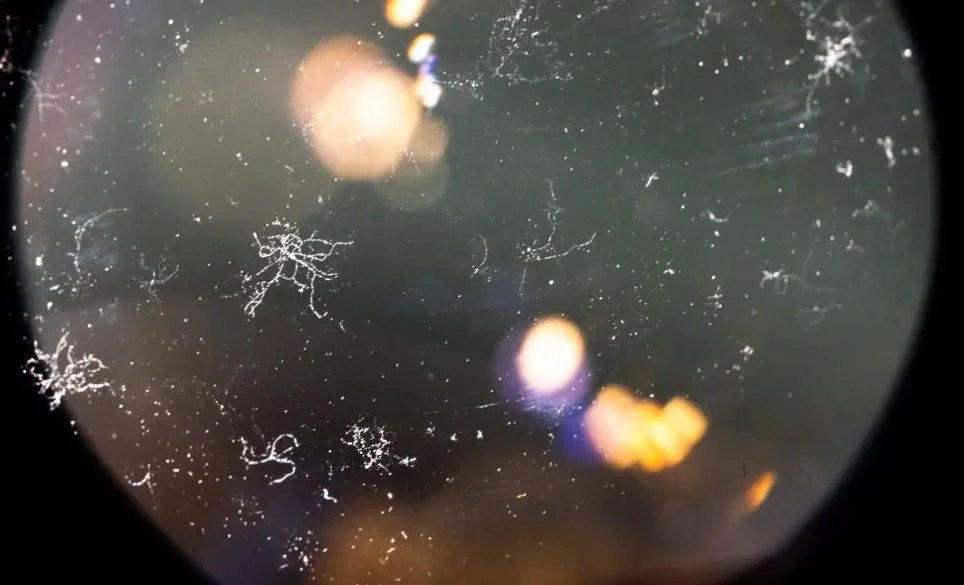
I remain shocked a how few sellers of lenses know how to check them properly for either fungus or minor surface damage to front or real elements. This sadly, includes several trade outlets. After another recent Ebay return (for fungus) I thought I’d share how I was taught to check lenses when I worked in the trade.
How to check a lens for fungus and minor optical blemishes ( such as cleaning marks).
If you simply look into the front or rear of a lens it only gives you the most basic report. To check fully, the lens aperture needs to be held fully open and the lens held up to a bright light source such as a desk lamp. Then look into the REAR of the lens while pointing the front at the light. Move the lens side to side just off the direct line of sight. If there is fungus that had not been visible from the front, it will show up from the rear. Repeat withh the view from the front for completeness. The key is viewing with transmitted light rather than reflected.
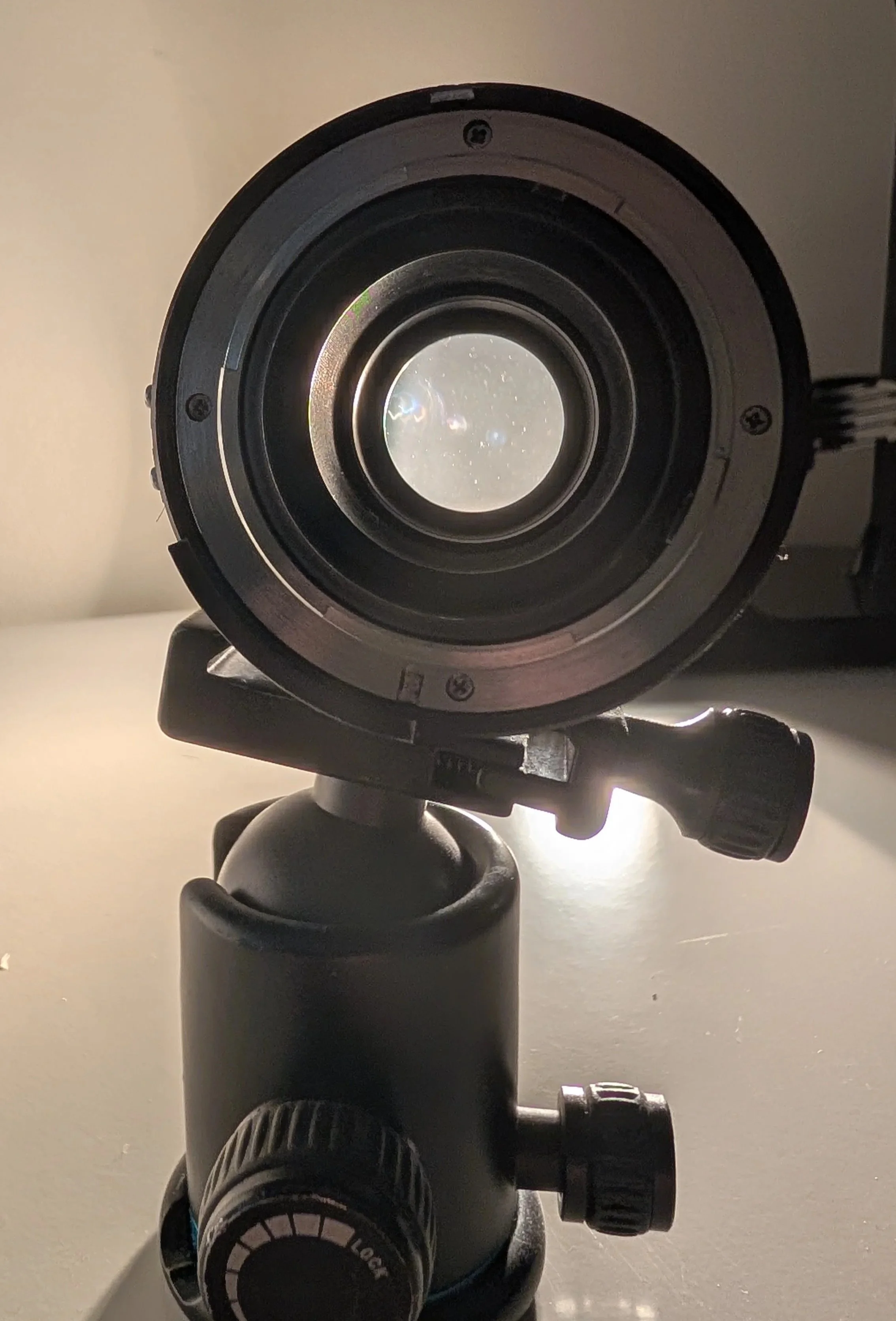
An old independent 138/2.8 from the 70’s above. A clean bill of health.
Fungus will show up as blooms, filigree shapes, branches or other obvious organic shapes. From the rear, surface damage to the front element will shine out in a way not visible using reflected light .
Note: (1)I will not allow a lens with fungus anywhere near my ‘ clean’ lenses. The spores spread.
Note(2) SOME fungal infections in lenses can be cleaned using UV light or chemicals such as Hydrogen peroxide ( if you are competent at disassembly and reassembly) but in many cases the fungus etches the optical surfaces of lens elements or the balsam joints. Once that has happened there is no way back.
Note(3) Does a tiny bit of fungus really matter if it doesn't affect my pictures? Yes because if it is left unchecked it will spread and infect your other lenses.
Note(4) I have a lens that had fungus but I've stopped the spread with UV light and the fungus is dead. It ‘may’ be dead but it's hard to be certain. Do consider the effect on resale value. You might not be bothered about a bit of ‘dead’ fungus but any wary buyer will either stay away or expect a huge reduction compared with normal market value.
Preventing fungus
The first part of prevention is being lucky enough to live in a dry house in a relatively cool dry climate.
Second is to avoid keeping lenses in a camera bag. Keep them out on a shelf or in a dehumidifier cabinet.
Keep the little silica gel packs that arrived with your new lens and use them in your camera bag.
Preventing scratches and cleaning marks.
The debates will always rage regarding the use of protective filters. In my opinion the very best make no discernible ( under normal viewing conditions) impact on optical output
The worst make a small but detectable negative difference. Mostly I’d argue that a decent filter (Hoya, Kenko B+W) makes no critical degradation.
What is unarguable however is that without protection, a % of front elements will be scratched either by scraping with a sharp object or in the process of cleaning. Here are a selection of adverts taken in a single day in February 2026 for Nikkor 70-200mm f2.8 lenses.
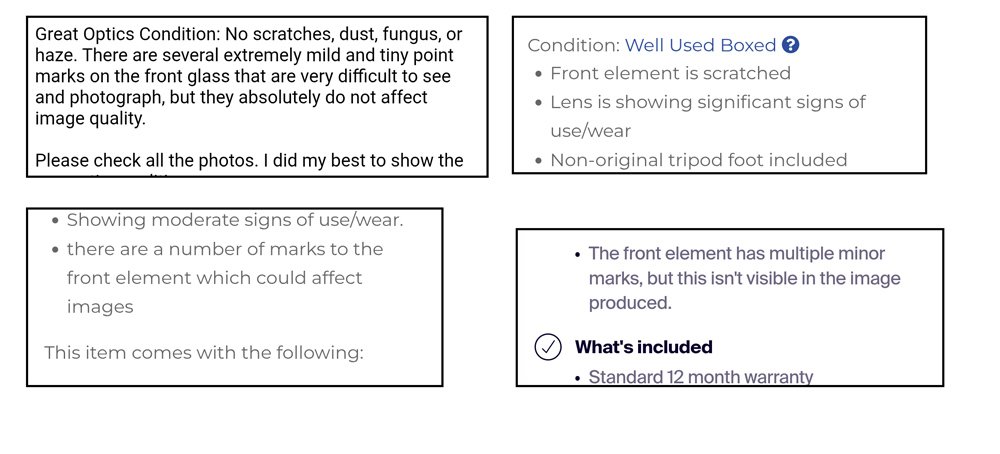
In most cases, they are accurate in stating that such scratches have little or no image degradation. However the big hit is in resale value, often making around a 50% hit on resale value. You may not be bothered about a tiny scratch but you can be sure that potential buyers will.
A small postscript here.
I was looking at lens prices for 70-200/2.8’s knowing that the new Nikon Z 70-200mm f2.8S mkII was imminent. I wanted to see how prices would change across the older models after release. Two specific results struck me.
Over a ten day observation of ebay and dealer adverts, 21% of all the Nikkor 70-200mm f2,8 VRii were advertised with mechanical faults, usually autofocus failures. This lens seems to be coming to the end of it’s service life. If you have one, I’d be tempted to move it one while its still good. I’d also not buy one of these now as they typically go for c.£500 and that’s a big investment on something near end of life. You may find a mint boxed one that’s never been used, but the writing is on the wall. The later FL is fine but close to the cost of a s/hand Z version.
The second observation is that having had a very good record until now, Nikkors from the 70’s ai ais versions are starting to show up with fungus far more often than they ever had. These need careful inspection if you own them and even more careful inspection if you’re thinking of buying one.