There are three main steps for geared head ownership. The first is to establish and understand the need and advantages. The second is to understand the disadvantages. The final element is to decide how much resource you can or are prepared to allocate to ownership.
I've owned a few geared heads over the years, none without their faults.
See also this review of the Sunway geared head rather than having sections repeated here.
For me there are two specific advantages of a geared head. The first is widely valued and is the ability to make small incremental adjustments to a composition by only varying one element at a time. This means that in getting the upper frame boundary correct, you don’t accidentally move the bottom or side.
The second key advantage for me is that once the camera is attached, all adjustments can be made with one hand ( not possible with a B&S head). This becomes critical if you are trying to hold an umbrella in the other hand. For use in the rain, a geared head can be a game changer.
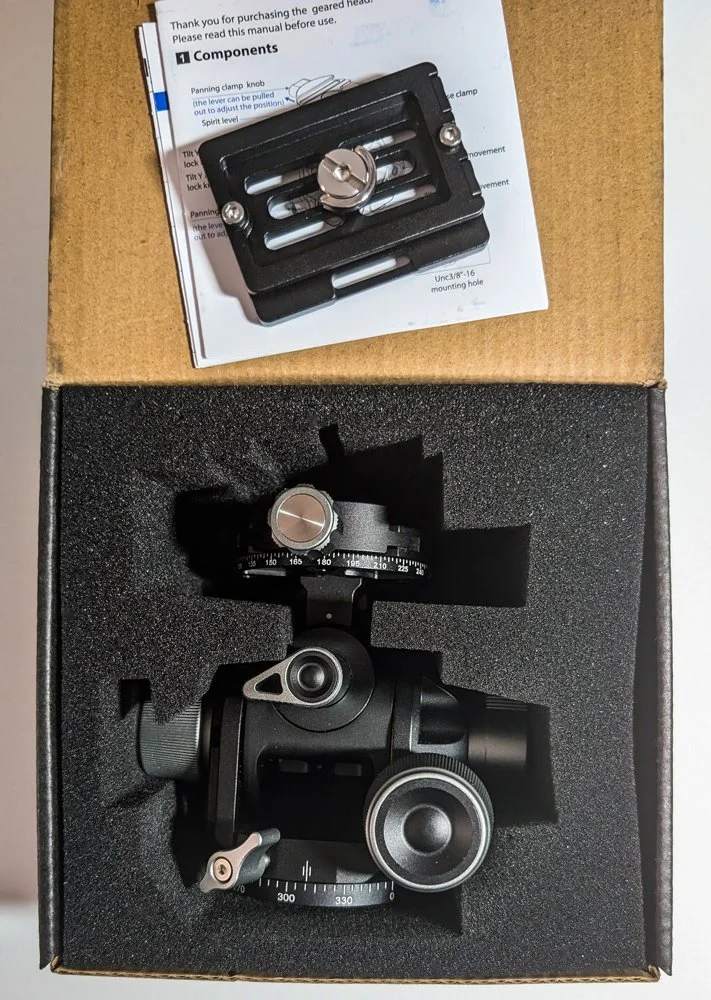
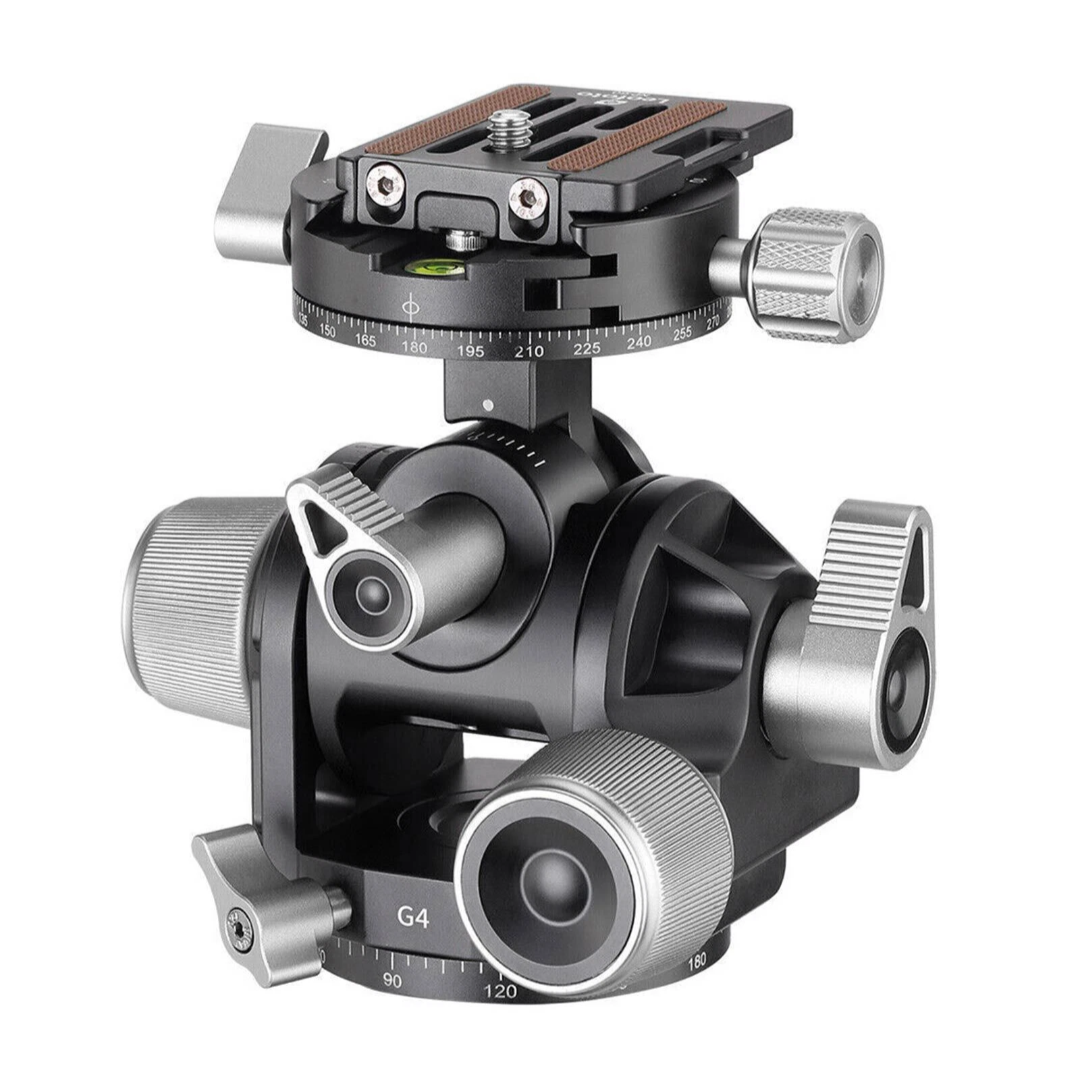
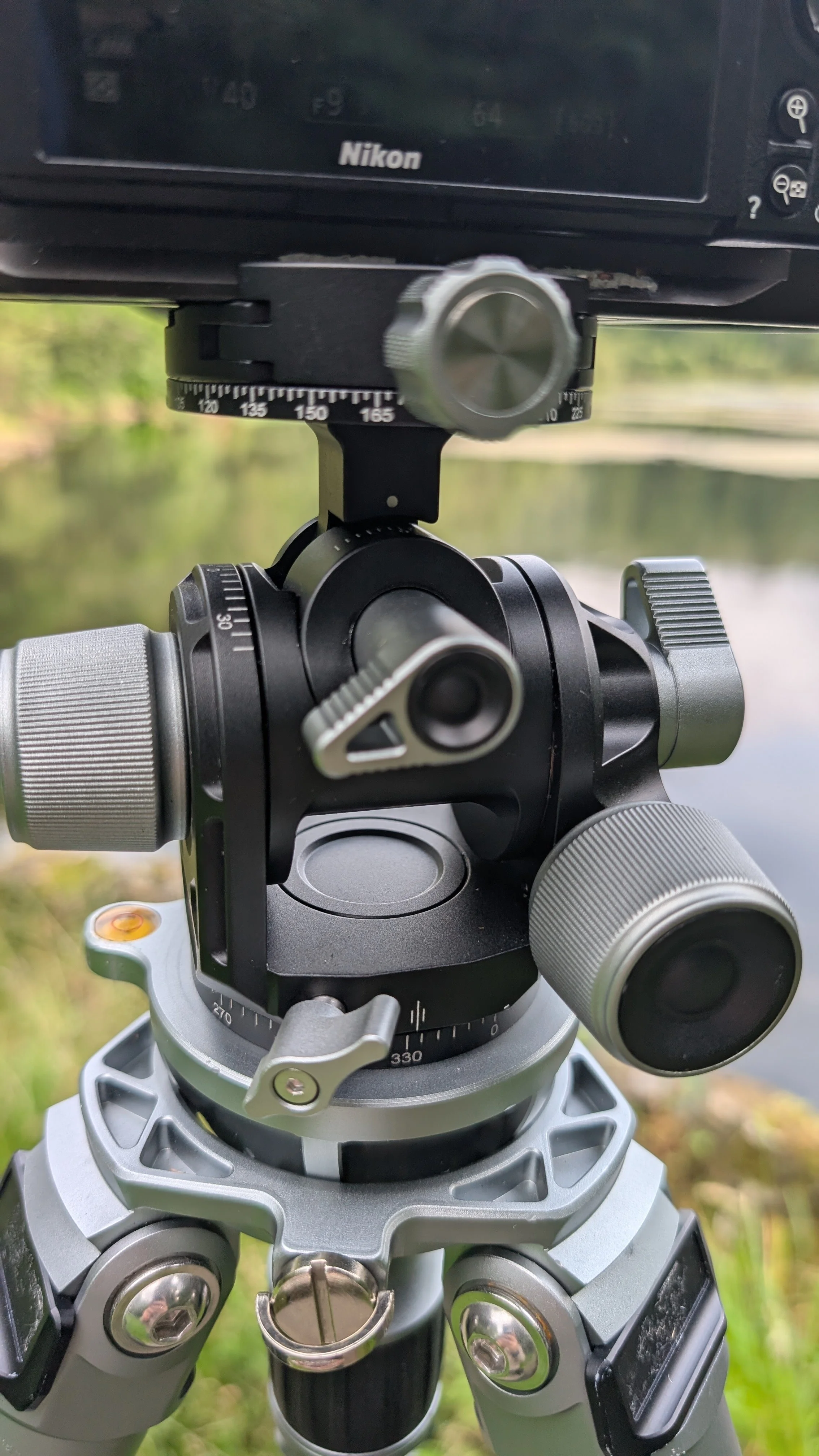
Opening the Leofoto box reveals a piece of engineering excellence and beauty. It feels superb and every aspect seems to work at least as well as the Arca D4 to which it bears a noticable resemblance. .
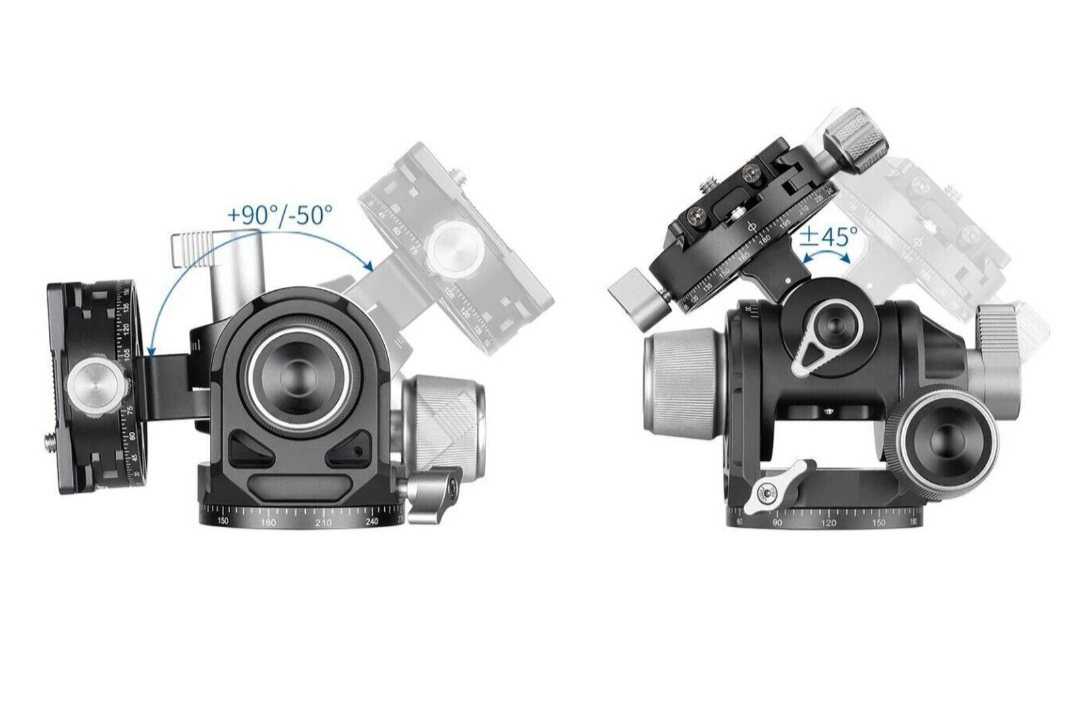
The range of movements is shown above. I don’t read too much into any of the quoted ranges for geared heads. Providing you use an L bracket and ideally a levelling head on a carefully set up tripod, the degree of adjustment required for final framing should be small for any images towards the horizon. There's a little more needed for images made looking at the ground.
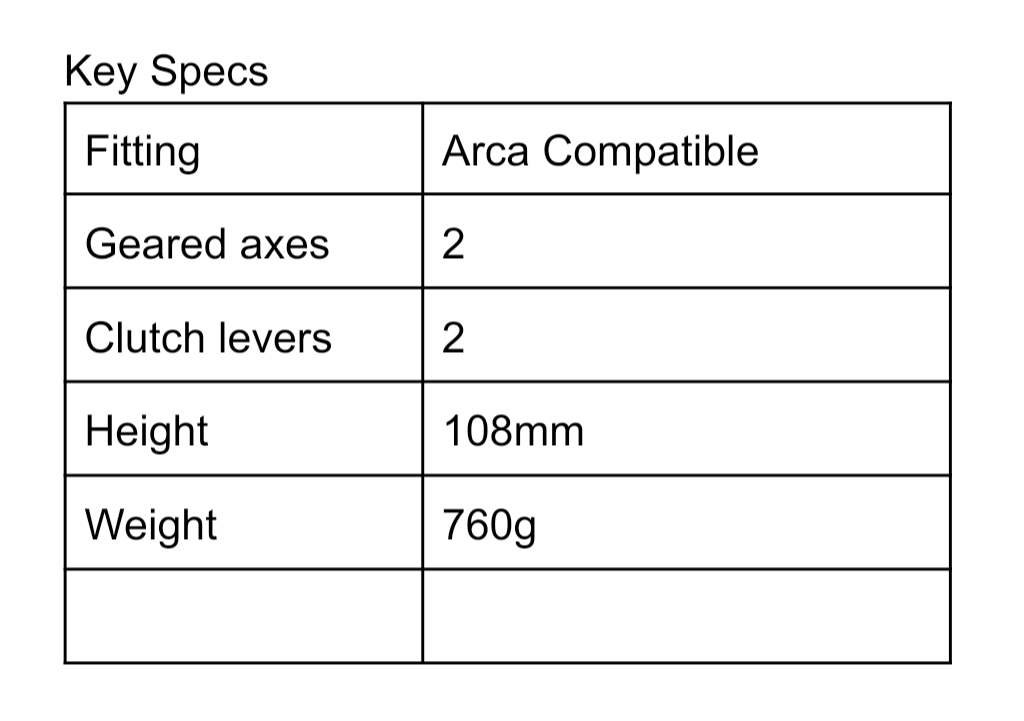
See below for a comparison of other Geared heads and a Ball head.
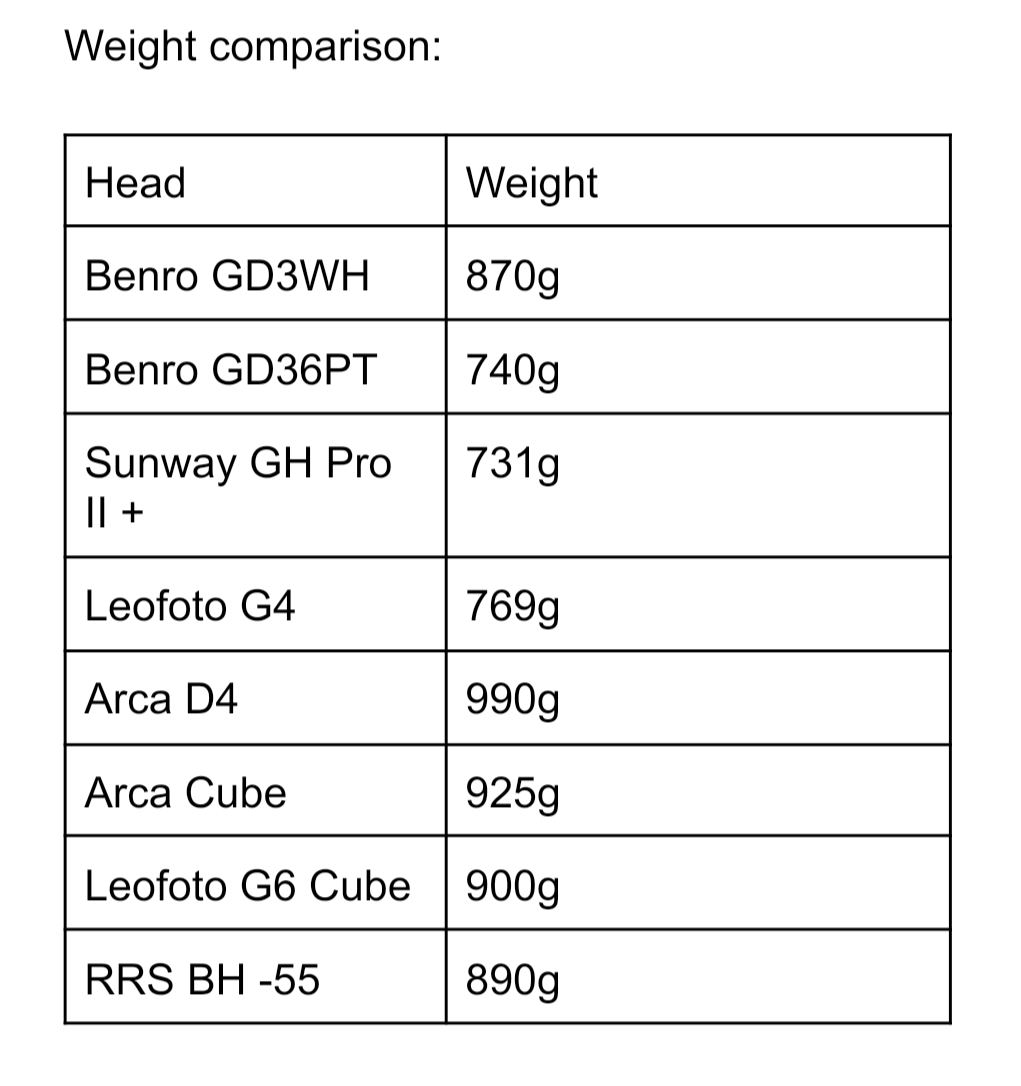
* Above are the quoted weights. My G4 weighed in at 730g without an Arca plate.
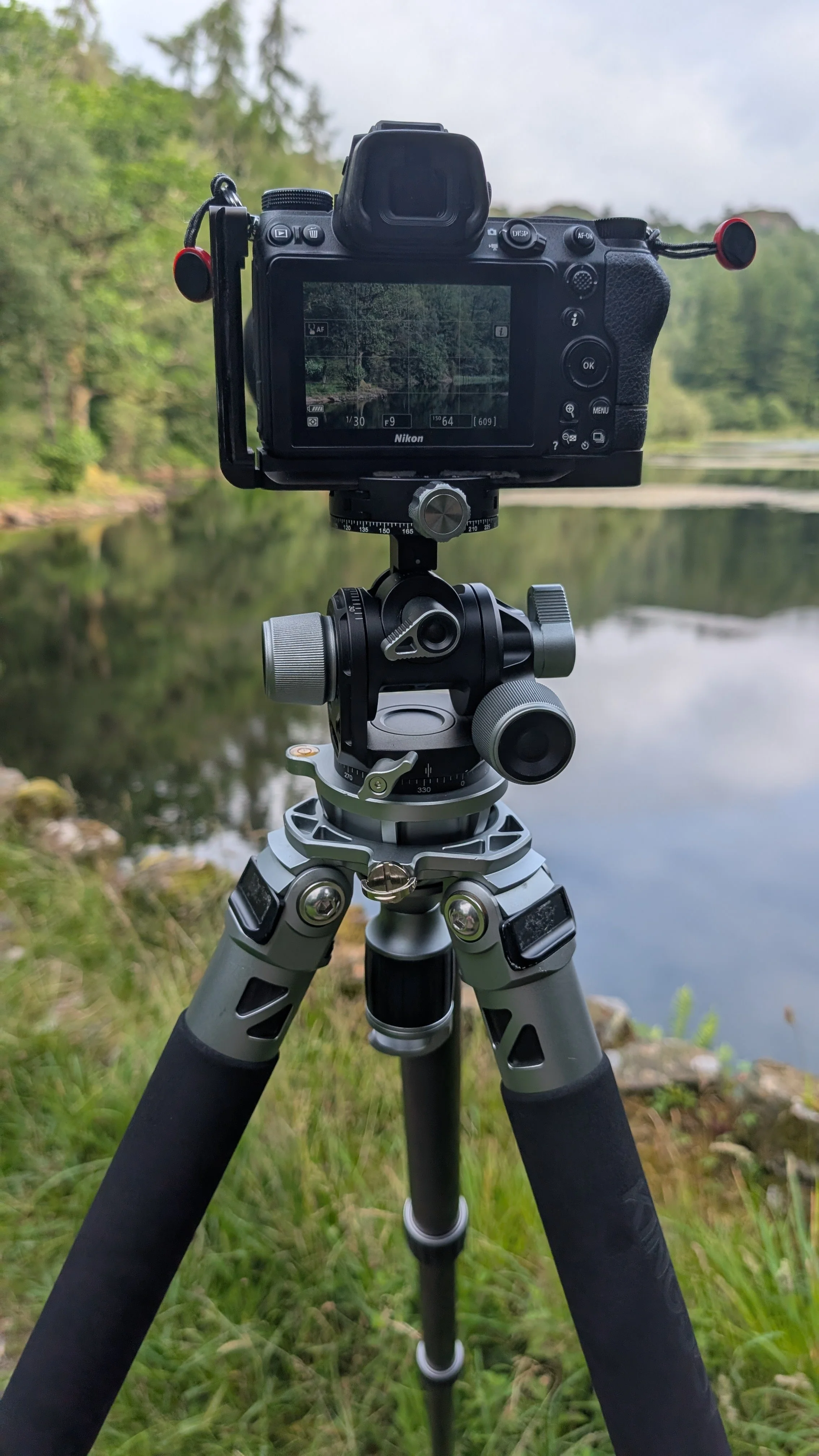
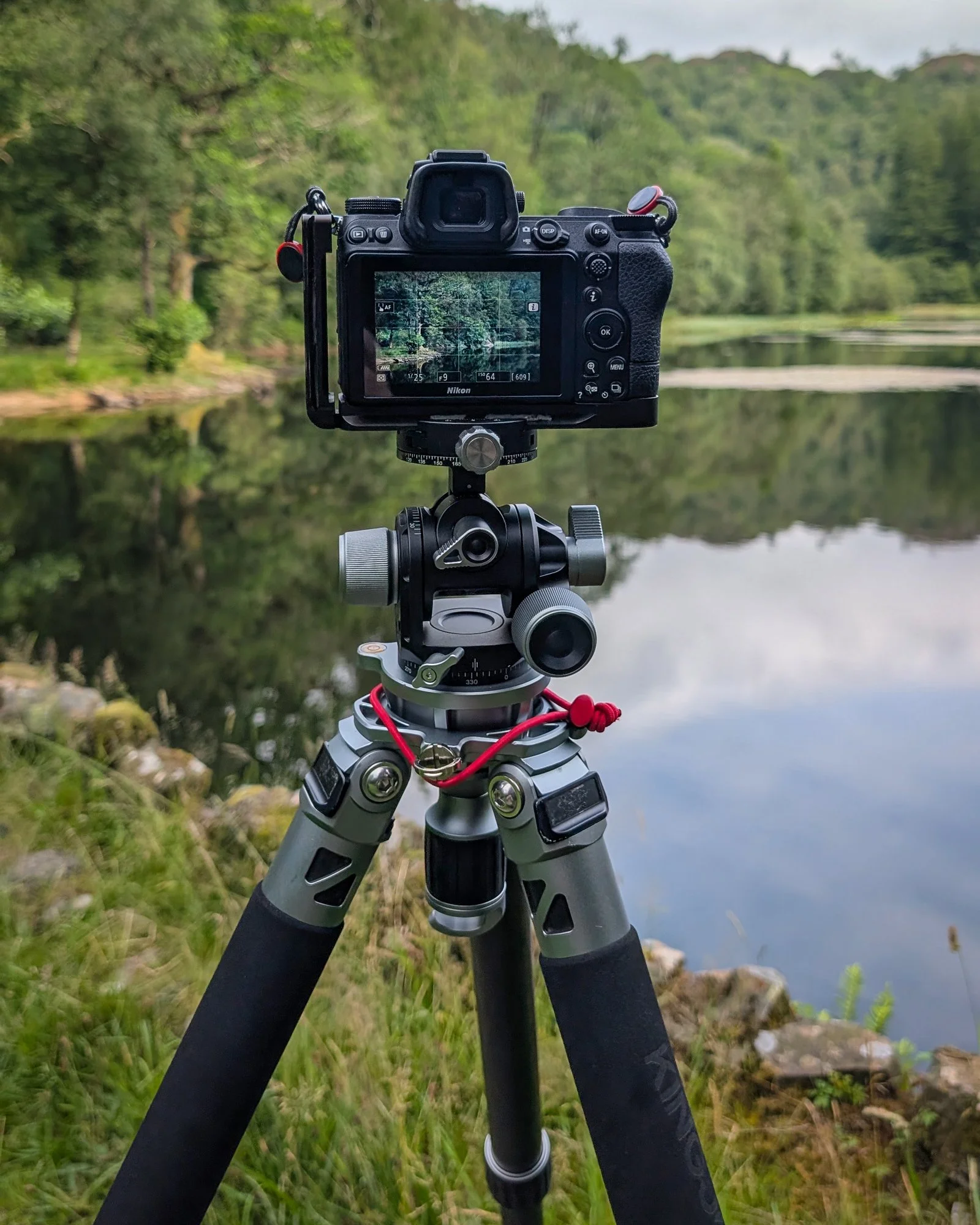
Leofoto G4 on a Kingjoy C85 Tripod.
The box contains an Allen key, paperwork but no case or other protection. The head has an Arca clamp which is screw operated rather than the alternative lever clamp arrangement. I was a very early adopter of lever clamps and moved away as their need for perfectly machined brackets emerged. They are (mostly) much more forgiving now but I’ve yet to regain full confidence. Note that this review is for the G4 which has gears in two planes rather than the G4 Pro /d/m which has an additional geared adjustment below the clamp. Also bear in mind that if you have a std G4, you can upgrade it to the 3 geared axis model by replacing the supplied top platform with the Leofoto GR-3 panning adapter. (c. £80)
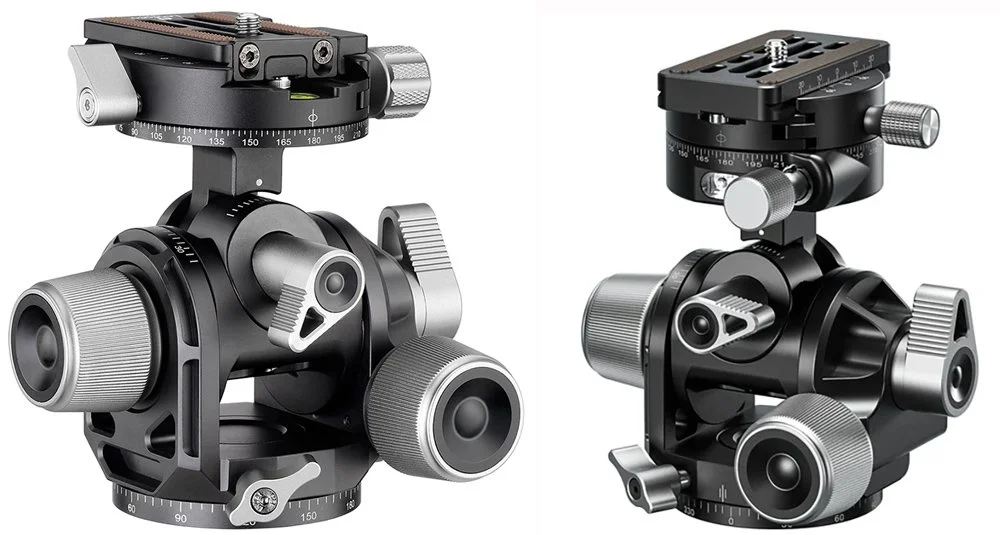
Leofoto G4 vs Leofoto G4 with GR-3 Panning adapter.
Initial impressions are very good indeed. Everything works as it should, intuitively for me at least. It ‘feels’ pretty much the same as the Arca which I have used briefly. The knurled knobs work smoothly and easily. They were on the stiff side at first but they seem to have bedded in quickly. ( The same applies to the D4). The head stays where you put it.
What makes this head different is the way in which it addresses one of the key disadvantages of gears heads. They are fine while you're making a careful composition of a static subject. However if a tiny sliver of light hits a peak across the valley and you want to recompose quickly, they are frustratingly slow. The Leofoto has two controls for each plane of adjustment. One is the gradual gear and the other is a clutch that completely disengages the gears and when both clutches are released, the head can move as freely as a ball & socket.
Other heads that I’ve come across that overcome this disadvantage in a different way are the Benro GD36PT and Arca Swiss Monoball P0+ Hybrid . These operate by making the whole geared mechanism move as part of the ball and socket below. I’ve not had the opportunity to try either of these heads but both come recommended by sources I’d trust. In the ‘alternatives worth investigating category’ there is also the Leofoto G3 - the baby brother to the G4. This is lighter and more compact. Again trusted sources speak highly of it but I’ve never even seen one let alone tried one.
Another disadvantage of geared heads is the risk of dust, grit, salt or sand getting into the precision gears. I've seen geared heads ( and much other photo equipment) killed by habitual use by the sea. There is no weather sealing on the G4.
Cyclic Salt
The damage to photographic equipment from water, sand and salt is well documented. It is also nothing new. In the 80’s I was selling and hiring Nikon ( fully mechanical) advising caution on beach use and seeing the warranty repair requests turned down due to salt corrosion. A key element here is what is known as Cyclic Salt. This is the process where wind picks up sea water from waves, the water evaporates and salt in fine particular form is carried by the wind. In an onshore wind, your kit is being salt blasted. There is no requirement for cameras or tripod heads to be dropped into the sand or water for them to become corroded. Much damage limitation can be achieved with a thorough wipe over at the end of the day but over time the problems tend to build up. We all have our own approaches. Some celebrate the weather sealing on their cameras & lenses. I've always used a rain cover by the sea except for the calmest days. Whatever your approach, the presence of salt and sand are undeniable. The best tripod head designs include considerable effort to seal against ingress; others present their inner workings as soft targets. In my view, meticulous care is needed to keep camera equipment and sand separate.
The remaining disadvantages are size/weight, cost and fragility. This Leofoto is a little lighter than similar heads and 100g lighter than my RRS BH-55. At £3-400, the price is very attractive. I've always added an extra level of care with transport, storage and use of geared heads. They have many precision parts and they are a major investment. I think it's a shame that Leofoto don't include a case of any sort. I've traditionally used a suitably sized lens case, either neoprene or padded. I tether mine while photographing unless its windy in which case it goes in the bag.
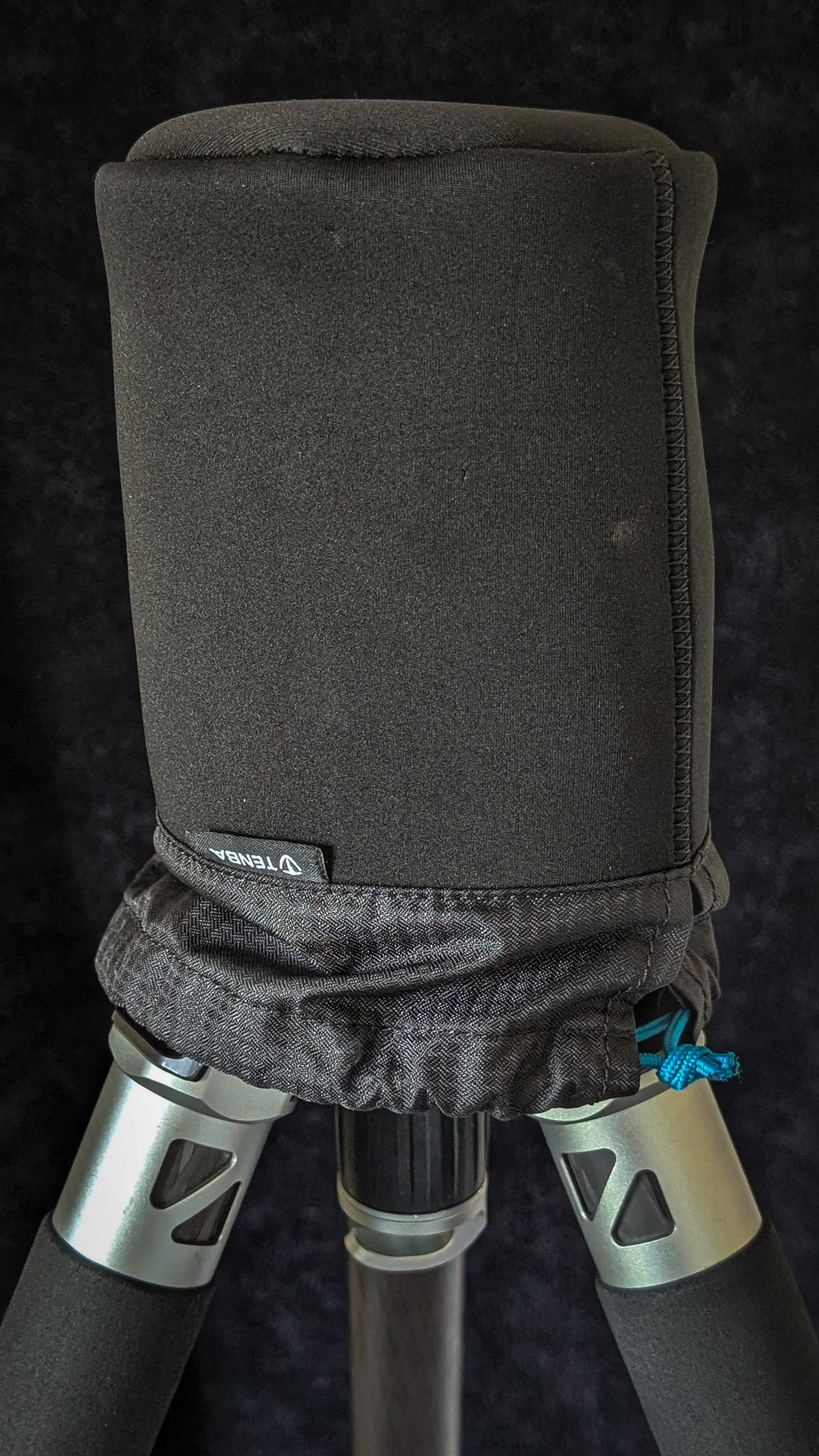
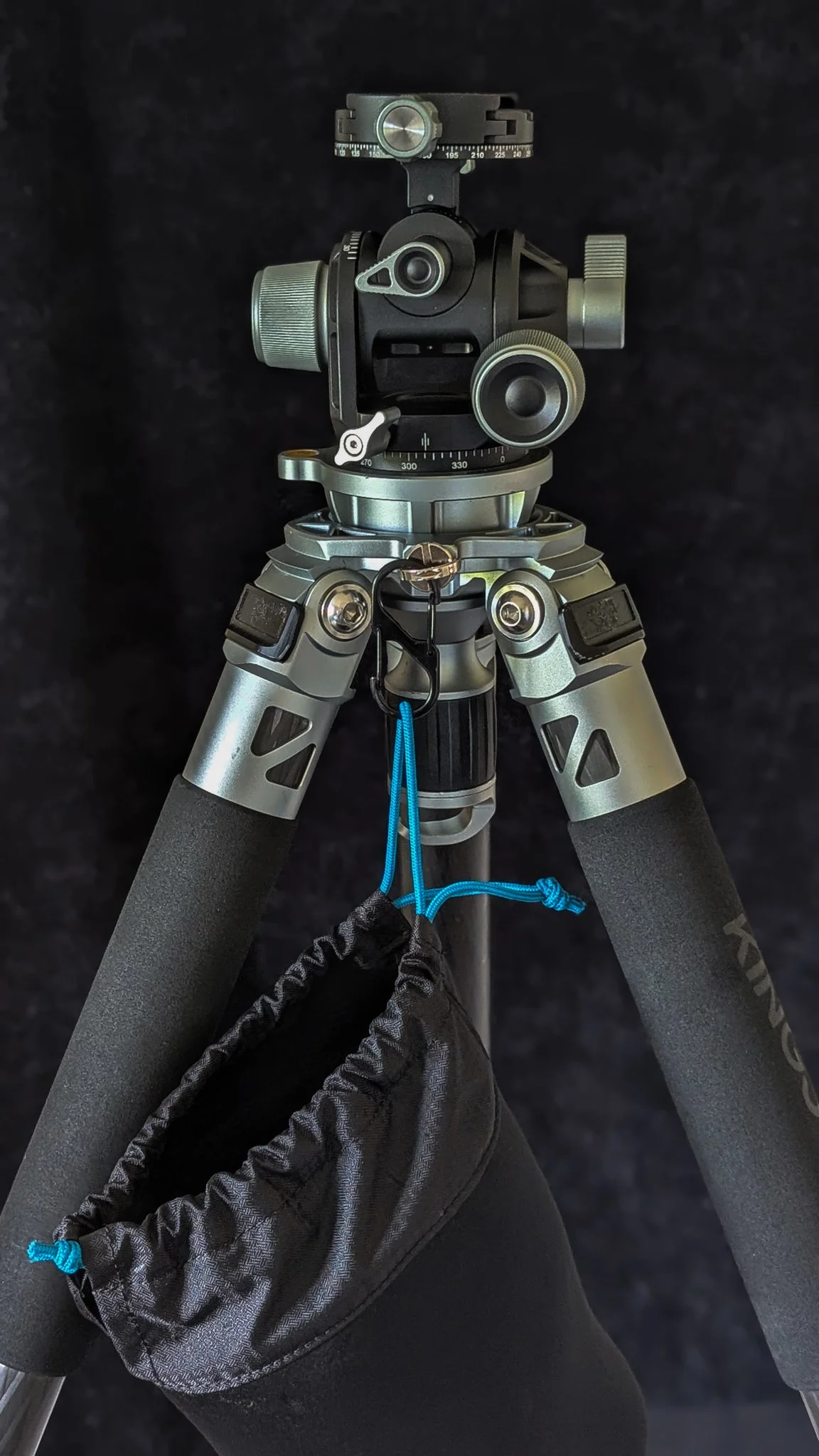
In use
I've genuinely enjoyed using this head, it's the best geared head I've owned and as good as any that I've tried. I've already sold my Sunway ( review here) as this Leofoto suits me much better.
The knurled adjustment knobs grip well and move smoothly. Adjustment is gradual and linear. The finest changes can be made easily. The head is stable and is as rigid as any of my ball heads for the weights I use. The heaviest combination I have is the Z7ii + 70-200/2.8 S. With bracket that comes to about 2250g.
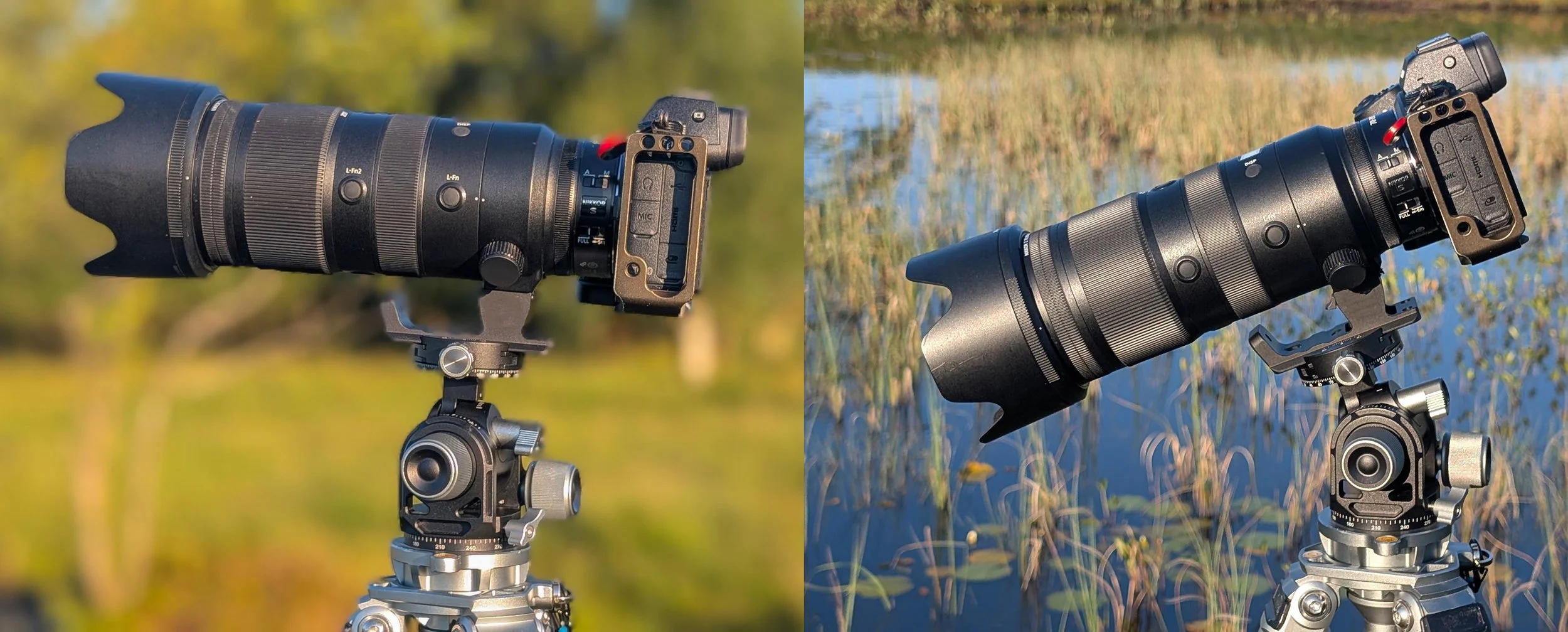
With this modest, balanced load, the head stays put. No drift or sag.
That's around 10% of the quoted supportable weight. My RRS BH-55 is quoted as a maximum load of 23kg. This G4 is quoted at 20kg. I think there's a big difference between quoted max and sensible, usable max. Either way, I don't have anything that approaches the limit. I've seen it suggested that you get 95% of the product for 33% of the price. This feels at first sight like a good deal and for many photographers it will be just that. Some users comment that the main ‘pillar’ that joins the base to the camera is a little under sized leading to a slight lack of stability. I hear this but my own use hasn't shown this up. The heaviest combination that I have doesn't seem to stress the head in any way or result in any noticable vibration.
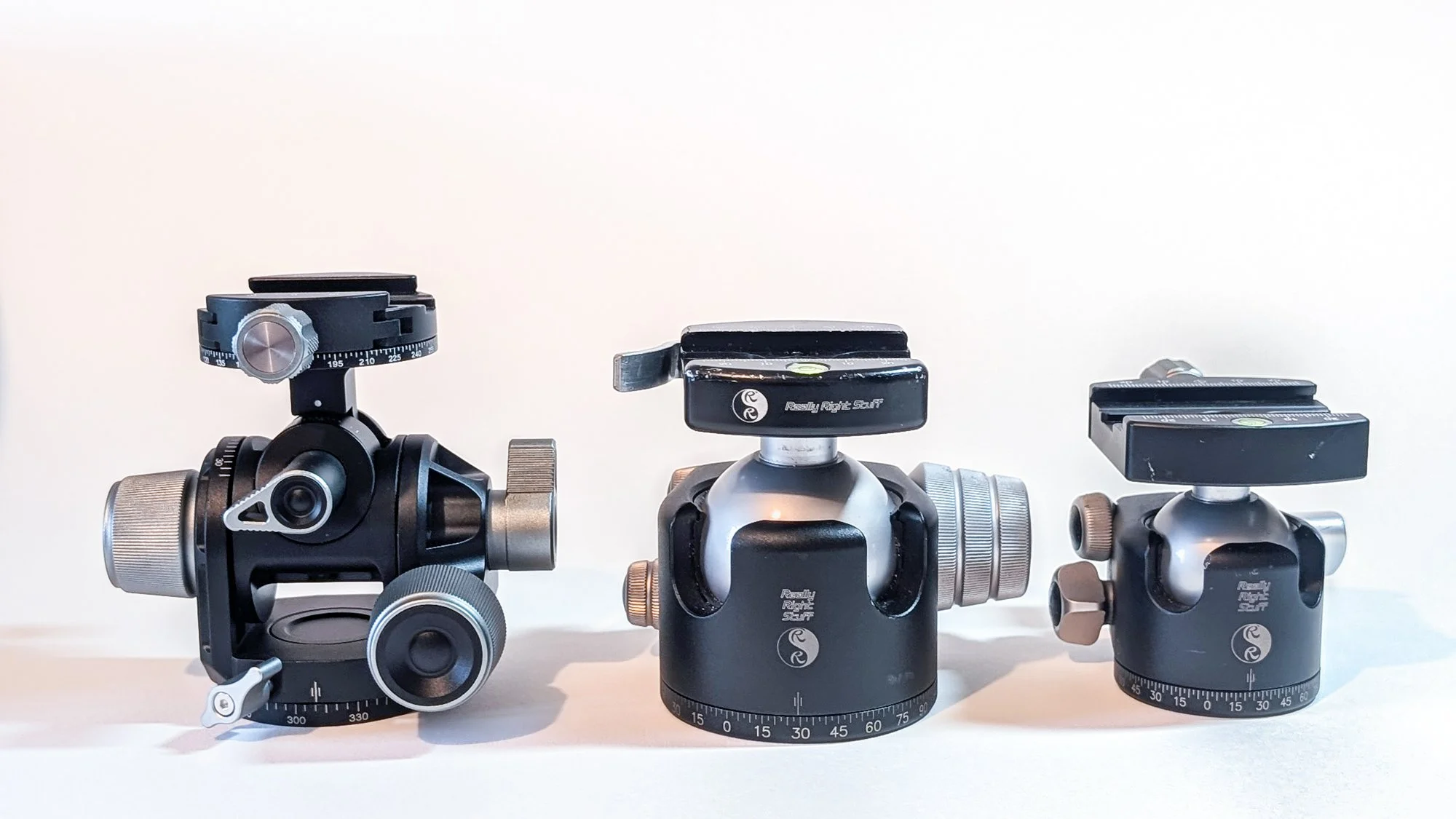
Size comparison Leofoto G4, RRS BH-55, RRS BH-40
As I side note on weight, I've seen a fair few photographers carrying cameras on tripods over a shoulder. While never advisable, you can get away with this if using a large b&s head ( assuming clamp properly secure). However I'd never ever do this with a geared head as all the forces are being multiplied and exerted in unexpected directions beyond the design parameters. Gears will loosen and play will creep in by doing this.
Construction & robustness
The head is constructed from aluminium alloy with brass gears. The main parts are CNC machined from blocks rather than being cast. The finish is excellent by sight and touch. My sense is that the weight and cost savings of the Leofoto make it slightly less durable, most of the alloys used in such items are broadly similar weights. As this head weighs less, there must be less material and other parts. The question then is whether the saved weight was redundant or not. There is no weather sealing. As a photographer who is very partial to our coastline, this leaves me thoughtful.
This is the view from Leofoto:
“The G4 head is not sealed, so when using it in beach or sand, the sand will go inside the head. Sand ingress and water damage are not covered under our warranty.”
They’ll fix it , if possible, but you'll have to pay and also for shipping to China.
This should be set against the fact that you could destroy 3 Leofoto heads and still spend less than the Arca equivalent . I wouldn't expect any great issues under normal inland use where rain is the only assailant. However the acceptance that salt and sand can gain access together with the fact that any resulting damage would not be covered by the warranty, is a noteworthy point depending upon your normal use scenarios. In contrast Arca tell me their D4 is both sealed and warranted not to take harm. You start to see where at least some of the extra cost comes from. Note that this is not a criticism of a ‘budget design’. It is an observation of the parameters the designers were asked to consider. The Arca Cube at about 4x the price is similarly unsealed and I hear anecdotal stories of them being destroyed by frequent coastal use. Others, such as Julian Calverley, use Cubes in the harshest of environments on our coasts. I’d be cautious if using in such an environment.
Conclusion
Under most circumstances and with careful use, this is an outstanding tripod head. It performs in exemplary fashion. The G4 is beautifully made and finished. The function is very smooth and precise. The higest compliment I can pay is that this has already become my tripod head of choice for daily landscape photography. I’ve rarely had a piece of equipment that forced its way into my daily routine so quickly. The smoothness and precision of the geared adjustment is superb and the ability to quickly move the head by release of the clutches has been a revelation. As with so many things the key is understanding both the strengths and limitations and using accordingly.
Very highly recommended.